
"coffee harvest process"
10000 article(s) found
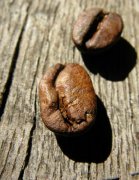
The process of coffee picking introduces the basic knowledge of coffee.
Coffee trees usually blossom in 3-4 years, about 2-3 months a year, and their appearance and smell are similar to those of jasmine. when they bloom, they grow in clusters on the branches and bloom for 3-5 days. After the flowers bloom, they bear small green fruits, which ripen and turn red into ripe fruits that can be picked after a few months. The skin of ripe fruit is red. Because its shape and color are similar to cherries, ripe coffee fruit is called coffee cherry in many places.

Harvest, processing and storage of coffee beans
The harvest of coffee beans in winter every year, that is, the dry season, is the harvest period of coffee beans. After three to four years of growth, coffee trees are maturing and begin to bear fruit. The fruits are arranged in strings or clumps next to the branches. The coffee beans are wrapped in a red coat and can be picked as soon as they turn red. Most Arabica coffee beans mature in June and August, and Robasta coffee beans
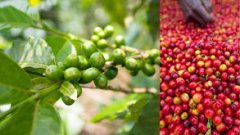
The basic knowledge of coffee the growth process of coffee
The coffee covered with endocarp will be planted in the seedbed (a plastic flowerpot called pot) and will germinate in 40 to 60 days and grow to about 50 centimeters in about 6 months after germination. At this stage, the seedlings are still fragile and must be covered with cold gauze and other things to block direct sunlight. The seedlings blossomed about three years after they were transplanted from the seedbed to the garden. During this period, Central America and others collected by hand.
Coffee varieties Coffee growing Coffee harvesting and processing
The weak acid fertile soil under volcanic gestation, obvious dry and wet seasons, high temperature and sufficient precipitation provide excellent conditions for coffee cultivation. Costa Rican coffee is 100% Arabica. In 1989, in a rare move, a national ban on Robusta cultivation was passed, which was extended to boycott cartimor varieties. See more caturra, caturra
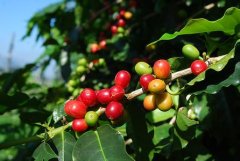
The basic knowledge of Coffee harvesting
From the coffee-producing countries, we can find that since almost all coffee is produced in countries with more cheap labor, it can be guessed that the process of harvesting coffee beans requires a lot of manpower. Yes, the harvesting of coffee is very hard and requires a lot of manpower, especially in many high-quality coffee, which can only pick fully ripe red cherries from coffee trees.

Do you know the Esmeralda Special of Jade Manor? Esmeralda Special introduction
Professional coffee knowledge exchange more coffee bean information please follow the coffee workshop (Wechat official account cafe_style) Esmeralda Special is a rare prize bean, online auction has set a new record three times. It was $21 a pound in June 2004, $50.25 in May 2006, soared to $130 a pound in May 2007, and arrived in May 2010.

The fruit of coffee tree is picked. Introduction to the process of how to make coffee.
In the washing type, the harvested fruit is poured into the sink, the floating matter is removed, the fruit in the water is moved to the pulp removal machine, the outer skin and pulp are removed, and then put back into the tank to remove the floating matter, the core in the water is poured into the fermentation tank, soaked for half a day or one day, the colloid on the surface of fermented beans is removed, washed, dried or mechanically dried, and the endocarp is removed on the sheller to form commercial raw coffee beans.
Coffee technology processes fresh coffee fruits into raw coffee beans.
The variety of coffee treated with raw beans certainly determines the natural flavor, but the treatment of raw beans determines the acquired quality. Selected coffee attaches great importance to flavor and quality, so it pays special attention to the technology and details of processing. Harvest: the harvest method is one of the criteria for judging selected coffee. if calculated from the time of germination, Arabica coffee will take about 5 years to blossom and bear fruit. Brazil
A brief introduction to the Life process of Coffee beans
Coffee trees take 3-5 years from planting to fruiting. 6-10 years of coffee trees are the most likely to bear fruit, about 15-20 years, is the harvest period. Coffee trees are usually bred in nurseries and grow into saplings, and then moved to coffee farms a year later, in full compliance with the way the Arabs planted and cultivated coffee trees. Coffee trees will continue to take root downward and upward in the first four or five years of their growth.

There are several methods to harvest coffee beans. Introduction to the process of grinding and calibration.
There are several methods for harvesting coffee beans. The process of grinding and calibration is very different. Coffee trees can be divided into two main varieties: Arabica and Robusta. There are also some minor species, such as the Liberian species (Liberica) and the Alabasta species (Arabusta), but they are rare on the market. Arabica

Coffee picking and processing methods Brazilian coffee beans processing methods
There are two ways to prepare coffee beans for the roasting process. The method chosen has a significant impact on the final value and quality of the coffee. The cheapest method is called drying, which is used for lower quality coffee beans, while higher quality coffee beans are processed by wet processing. Drying is used for unwashed coffee
The process of turning fresh coffee fruit into raw coffee beans.
The variety of coffee treated with raw beans certainly determines the natural flavor, but the treatment of raw beans determines the acquired quality. Selected coffee attaches great importance to flavor and quality, so it pays special attention to the technology and details of processing. Harvest: the harvest method is one of the criteria for judging selected coffee. if calculated from the time of germination, Arabica coffee will take about 5 years to blossom and bear fruit. Brazil

A brief introduction to the Origin, Development, History and Culture of Fruit-flavored Kenyan Fine Coffee beans
Mainly by large farms (Estate) and cooperatives (Cooperatives) two types. The former generally has a large planting area and has independent coffee processing facilities. Most coffee production is done by a large number of small farmers, who form coffee cooperatives. The coffee cooperative society employs special managers to supervise the coffee handling process of its members, even fine enough.
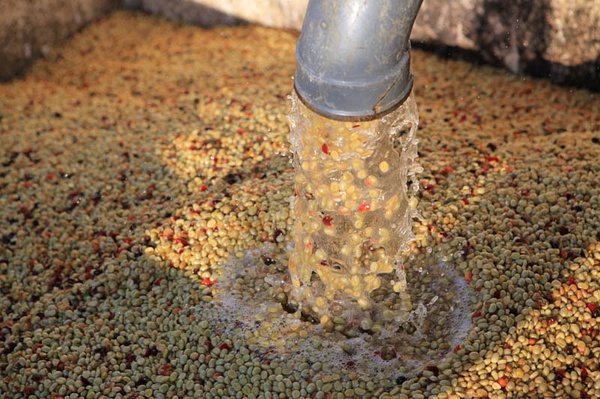
Steps of wet treatment of Yunnan coffee beans explain the treatment process of raw beans
Guide: the harvest season is almost over, so I would like to add an overview of the coffee processing process. In this blog post, I will introduce to you the steps of wet treatment in Yunnan after coffee picking. As the harvest season is almost over, I would like to add an overview of the coffee processing process. In this blog post, I will introduce to you after coffee picking, after

Find the right coffee flavor from the treatment method
The harvest of fresh coffee, taking Yunnan as an example, three batches of harvest time: the end of October to the middle of December for early fruit, yield is less; the middle and late December to the end of January for coffee fruit concentrated maturity period, this batch of coffee overall quality is the best; into February the rest are mostly diseased fruit, yield is also very small. Coffee fruits are harvested one by one, and the ears cannot be picked down, and the stems behind the fruits cannot be pulled down (fruits).

A brief introduction to the market price of glossy Kenyan boutique coffee beans
Coffee cultivation in Kenya is mainly divided into two types: large farms (Estate) and cooperatives (Cooperatives). The former generally has a large planting area and has independent coffee processing facilities. Most coffee production is done by a large number of small farmers, who form coffee cooperatives. The Coffee Cooperative Society hired special managers to supervise the coffee handling of its members.

A brief introduction to the flavor, taste and aroma characteristics of delicious Kenyan boutique coffee beans
Almost all Kenyan coffee is sold through the coffee exchange in Nairobi, the capital. Coffee auctions are held at coffee exchanges every Tuesday during the harvest season. Traders with trading qualifications will get raw bean samples in advance, and after the cup test, they will choose the raw beans they like. In the following auction, the highest bidder will get. The coffee auction system in Kenya is considered

A brief introduction to the flavor and aroma characteristics of Kenyan boutique coffee beans
Coffee cultivation in Kenya is mainly divided into two types: large farms (Estate) and cooperatives (Cooperatives). The former generally has a large planting area and has independent coffee processing facilities. Most coffee production is done by a large number of small farmers, who form coffee cooperatives. The Coffee Cooperative Society hired special managers to supervise the coffee handling of its members.

A brief introduction to the Origin, Development, History and Culture of delicious Kenyan Fine Coffee beans
Almost all Kenyan coffee is sold through the coffee exchange in Nairobi, the capital. Coffee auctions are held at coffee exchanges every Tuesday during the harvest season. Traders with trading qualifications will get raw bean samples in advance, and after the cup test, they will choose the raw beans they like. In the following auction, the highest bidder will get. The coffee auction system in Kenya is considered
Boutique coffee common sense the picking process of coffee beans
Coffee trees usually blossom in 3-4 years, about 2-3 months a year, and their appearance and smell are similar to those of jasmine. when they bloom, they grow in clusters on the branches and bloom for 3-5 days. After the flowers bloom, they bear small green fruits, which ripen and turn red into ripe fruits that can be picked after a few months. The skin of ripe fruit is red. Because its shape and color are similar to cherries, ripe coffee fruit is called coffee cherry in many places.